|
Long-Term Dynamics Analysis
The growing demand for renewable sources of clean energy has significantly increased the presence of wind and solar power supplies for power generation portfolios. Utilities are now facing the challenge of managing variable sources of energy interconnections to the grid.To prepare for increased penetration levels and to plan the deployment of Distributed Generation Resources (DER), new simulation tools are needed.
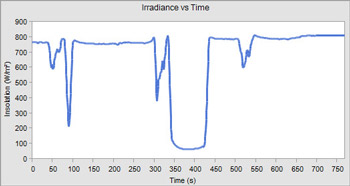
The CYME Long-Term Dynamics Analysis module offers a time-series simulation tool to study the impact of irradiance variations, wind fluctuations and load variations on network controls such as regulators, load tap changers and switched capacitors, and on the behavior of battery energy storage devices.
Analysis for Distributed Energy Resources
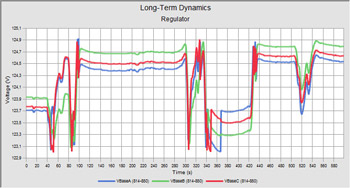
The intermittency of wind and cloud-over periods alters the output of wind energy systems and photovoltaic (PV) generation. By analyzing the impact of such variations on regulators, load tap changers and capacitor switching, the Long-Term Dynamics Analysis allows power engineers to properly assess the impact of DER integration and to better understand related technical issues such as var control and voltage regulation. The module also allows the study of reserve capability of any battery energy storage device.
Sun Radiation, Wind Speed and Load Profile
A curve library is included in the CYME software to allow the user to create their own long-term dynamics curve models along with generation curve models and motor curve models. The Long-term Dynamics Analysis module uses the following curves:
- Irradiance
- Wind speed
- Load
- Generation
- Motor
Accurate Equipment Modeling
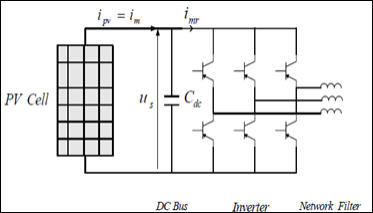
Detailed distributed generator models, such as wind energy conversion systems (WECS), are available. The CYME software features a detailed PV system model for which the output function is represented by manufacturer data such as:
- Irradiance curve model
- Current at maximum point
- Voltage at maximum point
Evaluating System Impact
With the Long-Term Dynamics Analysis module, time-series simulations can be performed to assess how the DER output profile affects:
- Voltage regulators
- Load tap changers
- Capacitors
The user can specify the activation time delay, tap changer delay and mechanism delay data of the regulators and LTCs tap changing algorithm in order to prevent unnecessary switching due to voltage fluctuations. Time delays are also available for shunt capacitors and switchable shunt banks to specify closing and tripping delays. The user also has the option to start the analysis at any moment in time (other than zero) in order to include time-controlled capacitors in the analysis.
Voltage regulators have four reset modes: fast, induction disc, delay and delay freeze reset.
The presence of battery energy storage systems has increased to support the importance of DER integration and to allow peak-shaving.
The energy storage model takes into account of charge and discharge delays, and features the following controls:
- No monitoring: time driven and load shape modes
- Power monitoring: power driven, power peak shaving, power following, power levelling modes
- DER monitoring: DER driven, DER levelling, DER support and DER smoothing modes
Time-based simulation results are illustrated in comprehensive graphs. Reports are available for device controls such as regulator tap changers, and for the penetration level of each type of distributed generation in the network. Detailed reports and charts are also available for monitored devices. Power engineers can easily evaluate the performance of the system with or without DER, determine the impact of different DER locations and evaluate the effect of different variable profiles.
The Long Term Dynamics Analysis module is a powerful tool to evaluate solar array and wind farm impacts on the power system, preparing the network for tomorrow’s higher DER penetration levels.
|

 enlarge picture